Marine General Liability Insurance for marine contractors
Third-party bodily injury and property damage protection built for over-water work that standard general liability excludes — covering docks, piers, marinas, seawalls, and waterfront projects, including the watercraft and navigable-water exposures most GL policies strip out.
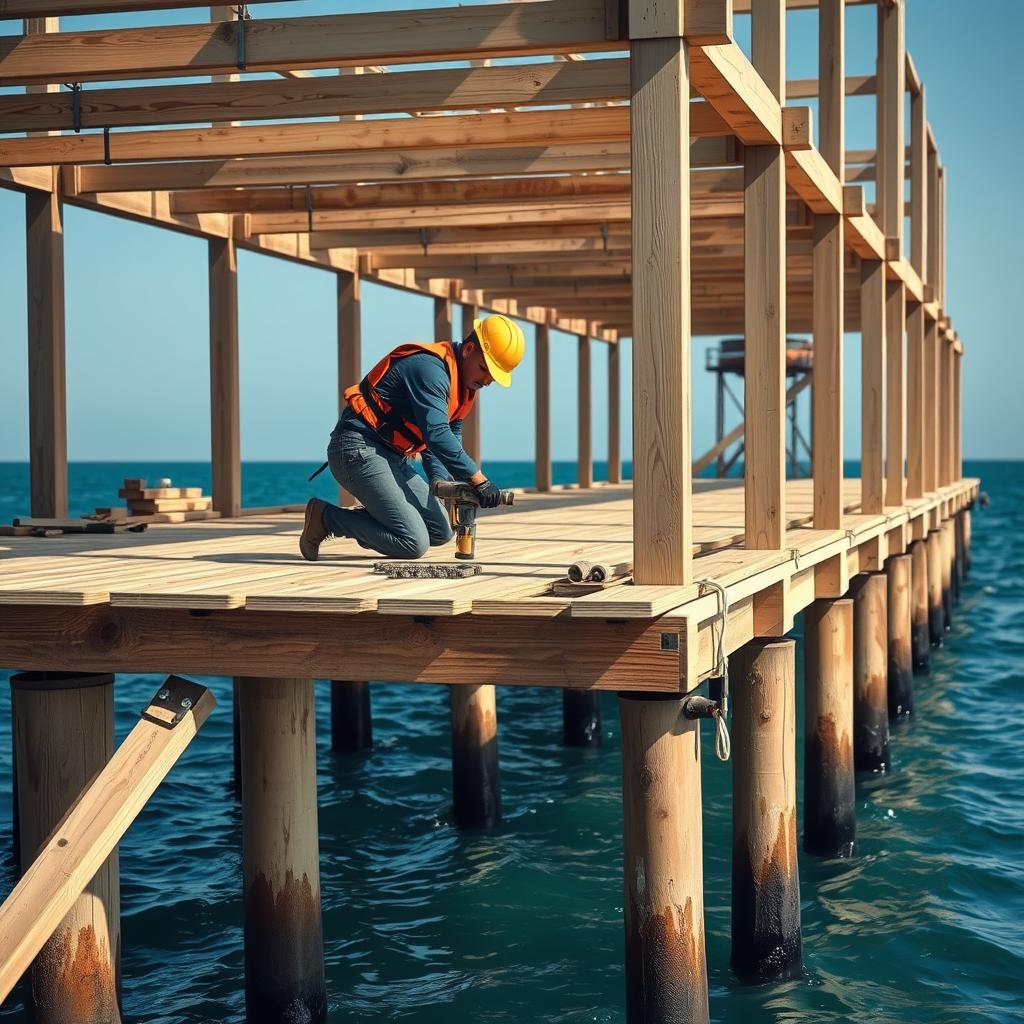
What it covers
- Bodily injury to the public, boaters, and other trades on your marine jobsite
- Property damage caused by your over-water and waterfront operations
- Operations over navigable water that standard GL excludes
- Products-completed operations for docks, piers, and marinas you've finished
- Defense costs and legal fees when you're named in a marine lawsuit
- Additional-insured status for the ports, marina owners, and developers you build for
Who it’s for
- Dock and pier construction contractors working over water
- Marina build and repair contractors
- Seawall, revetment, and shoreline contractors
- Pile-driving and dredging crews working on navigable water
- Any marine contractor whose standard GL excludes the over-water work
Why CCA
- True marine GL — not a landside policy that denies the over-water claim
- Additional-insured and waiver-of-subrogation endorsements issued fast
- Limits scaled to what ports, the Corps, and marina owners actually require
Common questions about marine general liability insurance
Marine GL covers third-party bodily injury and property damage caused by your marine construction operations — a boater hurt near your jobsite, damage you cause to an adjacent dock or vessel, or a completed-operations claim after the pier is built. It's specifically built for over-water work that standard GL excludes. It does not cover your own crew (Jones Act/USL&H/workers' comp) or your own equipment (equipment floater).
Standard commercial GL carries a watercraft exclusion and excludes operations over navigable water. So when a loss happens on or over the water — which is most of a marine contractor's job — a standard GL policy can deny the claim outright. Marine GL removes those exclusions and is the core coverage any over-water contractor must carry.
Marine GL covers third parties — other people and their property. The Jones Act covers your own crew members when they're injured on navigable water. They're completely different coverages and you need both: marine GL for the public and the project, Jones Act and USL&H for your crew.
Often yes, for damage you cause to a third-party vessel as part of your operations. But if you're doing work ON vessels (boat or yacht repair), you need a separate ship-repairer's legal liability policy. Tell us exactly what you do on and around boats and we'll structure it correctly.
Additional-insured status extends your marine GL to the port or marina owner for your operations, so if a claim arises from your work your policy responds first. It's a standard contract requirement, along with a waiver of subrogation and primary/non-contributory language. We issue these routinely.
No. Independent subcontractors need their own marine coverage (including their own Jones Act/USL&H) and should name you additional insured. If an uninsured sub causes a loss, you can be pulled in. We help set up certificate tracking so subcontracted work doesn't become your liability.
Most marine contractors carry $1M per occurrence / $2M general aggregate. Ports, the Army Corps, and large marina owners often require $2M, $5M, or $10M limits — we add an umbrella to reach them when needed.
Marine GL is usually rated on revenue or payroll, often split between over-water and upland operations because the over-water exposure is rated higher. Accurate documentation of how much of your work is over water keeps the premium fair. We document your real operation so you're not rated on a worst-case guess.
Most marina contractors pay $2,500–$9,000 a year for $1M/$2M marine general liability, with Jones Act/USL&H rated on over-water payroll and equipment floaters based on scheduled marine gear. We quote the full program in about 15 minutes and show every market's price.
Yes. Contractors Choice Agency is licensed in all 50 states and writes marine construction crews from the Gulf Coast and Florida to the Chesapeake, New England, the Great Lakes, and the Pacific coast.
About 15 minutes for a standard program. Once bound, we turn around additional-insured certificates, waivers of subrogation, and primary/non-contributory endorsements usually within minutes.
The Jones Act covers crew members who work on navigable waters as 'seamen.' If your crew works on a barge, tug, or over navigable water, standard workers' comp does not apply — you need Jones Act coverage. We'll confirm exactly where your operations fall.
Only upland. Over-water work on navigable waters falls under the Jones Act and USL&H (Longshore), not state workers' comp. We coordinate all three so every crew member is covered everywhere they work.
Equipment is covered under an inland marine / contractors equipment floater (and watercraft may need a separate hull/P&I policy), not under GL. We schedule barges, cranes, pile drivers, and dredges at replacement cost so a loss over water is covered.
Most marine contractors carry $1M/$2M marine GL with a $2M–$5M umbrella. Ports and large marina owners often require $2M–$10M limits plus additional-insured status. We size limits to your actual contract requirements.
Yes — personal auto excludes business use and will deny claims when you haul dock sections or materials. Commercial auto covers your trucks, trailers, and lowboys, including hired/non-owned vehicles.
Often, yes. We have excess-and-surplus (E&S) markets for marine contractors with loss runs, USL&H claims, cancellations, or tough exposures that standard markets decline.
Your marine GL doesn't cover independent subs — they should carry their own (including Jones Act/USL&H) and name you additional insured. We set up certificate tracking and additional-insured requirements so subcontracted work doesn't become your liability.
You reach a person with context, not a queue. We respond within 2 hours, help you document the loss, and manage the claim with the carrier so it's paid correctly and your operation keeps moving.
Marine construction has Jones Act, USL&H, and over-water GL traps that generic carriers miss or deny. A specialty broker knows the maritime statutes, the markets that write marine work, and how to manage a maritime claim.
Pair it with related coverage
Ready to protect your marine operation?
Get a 15-minute quote from specialists who understand over-water work — marine GL, Jones Act, USL&H, builder's risk, equipment, and auto.