Dock & Pier Builder's Risk Explained: Why Course-of-Construction Coverage Matters Over Water
By Josh Cotner
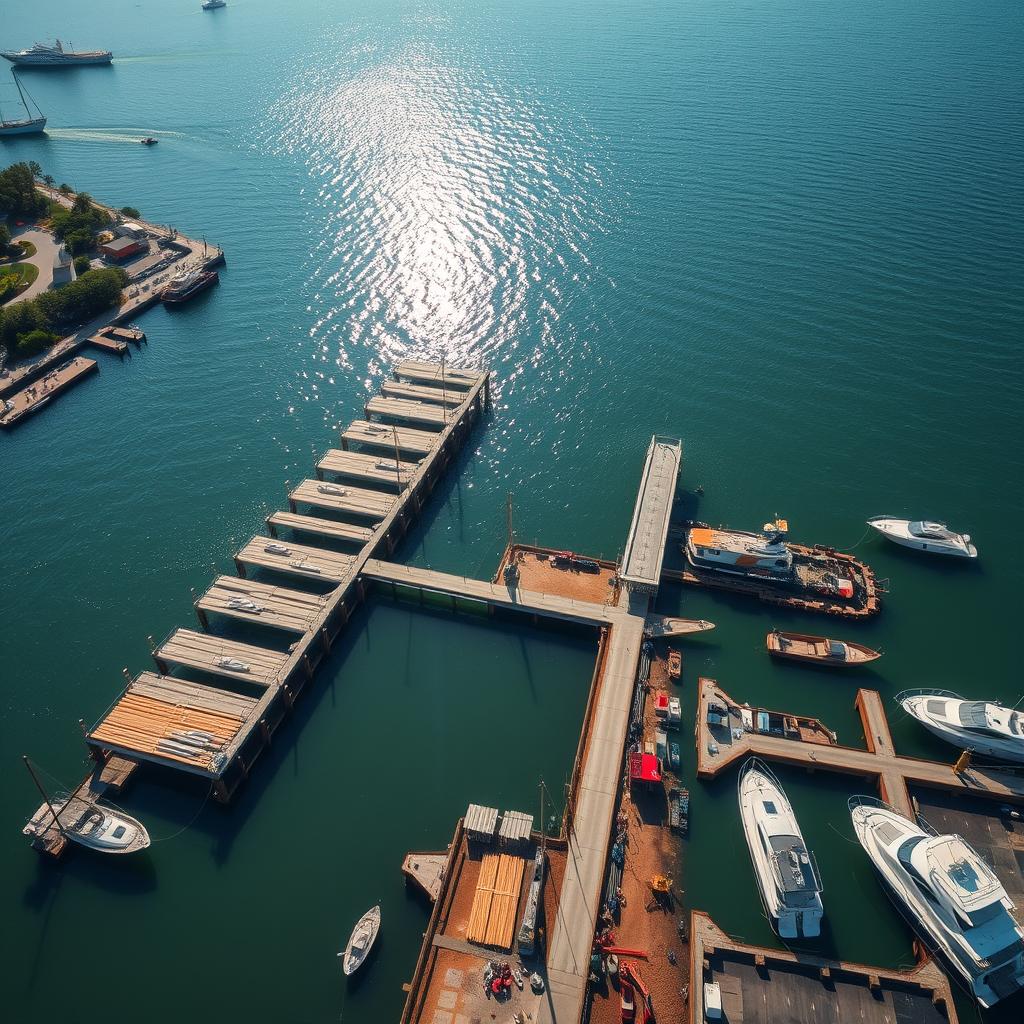
A dock, pier, or marina under construction is exposed in ways few other structures are. It's built over water, in the weather, often partially secured, loaded with valuable materials and hardware, and subject to wave action, storm surge, and tides for the entire construction window. When something goes wrong on a marine build, it tends to go wrong expensively.
That's what builder's risk (also called course-of-construction) coverage is for. It protects the value of the structure and materials you're building — from the day the first pile is driven until the project is complete and accepted. For marine contractors, it's one of the most important coverages on the program, and one of the most commonly misunderstood.
What builder's risk covers on a marine project
Builder's risk covers the structure and the materials that go into it during construction. For a dock or pier, that means:
- Pile sections — driven timber, steel, or concrete piles.
- Decking and framing — the lumber, composite, or concrete deck structure.
- Hardware and connections — brackets, bolts, cleats, and marine hardware.
- Labor in place — the work you've already completed and installed.
- Materials in transit and at staging — gear and materials headed to or staged for the site.
Against the causes of loss that matter over water:
- Fire — a wood dock under construction is highly combustible.
- Wind and named storm — the dominant exposure on coastal and Gulf builds.
- Wave and storm-surge damage — the marine-specific risk that hits partial structures hardest.
- Theft and vandalism — pile sections and marine hardware are valuable and often unsecured.
- Some weather damage — subject to the policy form and any named-storm deductible.
Why over-water builder's risk is different
A building under construction on land is exposed to fire, theft, and weather. A dock or pier under construction is exposed to all of that plus wave action, tidal forces, and storm surge — and a partial marine structure (piles driven but no deck yet, or a deck with no bracing) is uniquely vulnerable to those forces.
That changes both the coverage and the underwriting. Marine builder's risk carries the wave and storm-surge exposure that inland builder's risk doesn't, and in coastal and Gulf zones, named-storm coverage often comes with a separate (and sometimes large) deductible. We structure the policy for your region's real water and weather exposure so a storm during construction doesn't become your loss to absorb.
Who buys the builder's risk — you, the owner, or the developer?
It varies by contract. Often the project owner or developer carries a master builder's risk policy for the project. But gaps are common: the owner's policy may not cover materials you've delivered but not yet installed, or it may carry a deductible that gets pushed down to you, or it may not respond the way you expect when a loss hits your installed work.
When you're responsible for materials and labor you've put in place — and most marine contractors are, contractually — an installation floater or your own builder's risk makes sure you're protected regardless of what the owner carries. We review the project's program and add coverage if there's a gap.
Soft costs: the hidden exposure on bigger projects
For larger marina and waterfront builds, consider soft-cost coverage. Soft costs are the additional expenses from a construction delay — extra interest, real estate costs, re-engineering, and lost marina slip revenue. A fire or a storm that pushes back a marina opening by a season can generate substantial soft costs, and a standard builder's risk policy may not include them. Soft-cost coverage is optional but valuable on any project where a delay is expensive.
Replacement cost and the right limit
Two structural decisions matter most. First, insist on replacement cost, not actual cash value — a burned or storm-damaged dock should be rebuilt at current pricing, not depreciated. Second, set the limit equal to the completed value of the project (materials, labor, and profit) at the time of loss. A limit that's too low leaves the structure under-insured partway through the build; we help you set it correctly so the project is fully covered from start to finish.
Don't find out at claim time
The worst time to discover a builder's risk gap is after a storm has taken out the partial dock you're three weeks from completing. We write marine builder's risk that covers the real exposures — wave, storm, fire, and theft — and coordinate it with your marine general liability and equipment coverage so the whole project is protected.
Get a quote or call 844-967-5247. Read more about builder's risk for marine construction.
Need this coverage for your crew?
Get a real quote in about 15 minutes — we shop A-rated specialty trades markets.