Why Standard GL Won't Cover Your Over-Water Work
By Josh Cotner
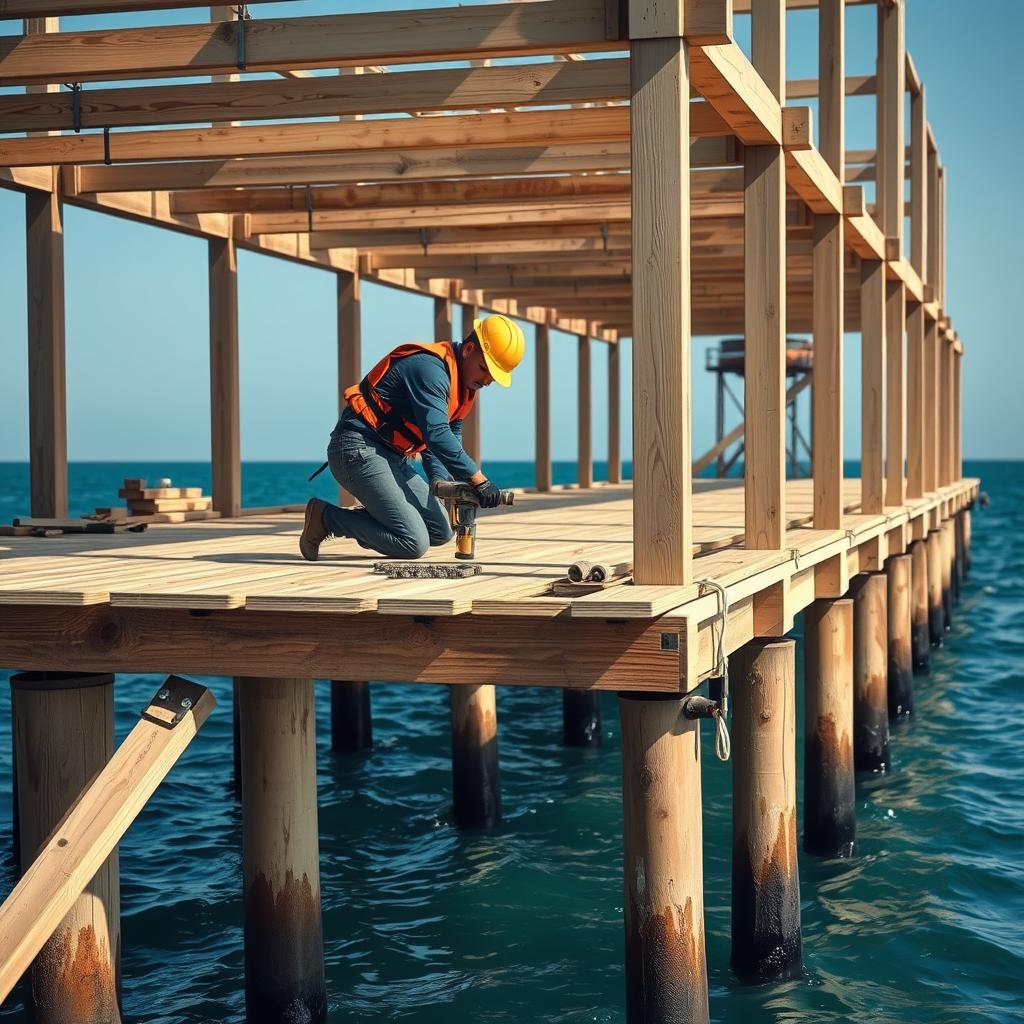
If you're a marine contractor carrying a standard commercial general liability (GL) policy, there's a good chance your most important work isn't covered. Not under-covered. Not partially covered. Excluded outright.
The reason is buried in the exclusions section of nearly every standard contractors GL policy: a watercraft exclusion and an exclusion on operations over navigable water. For a roofer or a plumber, those exclusions never matter. For a dock builder, a pier contractor, or a marina constructor, they're the whole job.
The exclusion that denies the claim
Here's how it plays out. A marine contractor buys a generic contractor GL policy — often the cheapest one they could find online. The work looks fine on paper: bodily injury and property damage coverage, $1M per occurrence, additional-insured endorsements for the marina owner.
Then a third-party claim happens over the water. A boater is injured near the jobsite. A pile swings into an adjacent dock. A crew drops a section of decking onto a vessel. The contractor files the claim, and the adjuster opens the policy and reads the watercraft exclusion. The claim is denied — because the loss occurred over navigable water, which the policy specifically excludes.
Now the medical bills, the vessel damage, the defense costs, and the settlement are on you. A "covered" operation turns into a business-ending loss.
Marine GL is built for over-water work
Marine general liability is a different policy. It's specifically designed to cover the exposures that standard GL strips out:
- Operations over navigable water — dock and pier construction, marina build and repair, seawall work, pile driving over water.
- Watercraft liability — for the tugs, workboats, and barges your operations depend on (coordinated with hull and P&I where applicable).
- Third-party bodily injury to the public and boaters near your marine jobsite.
- Property damage to vessels, docks, and adjacent waterfront property caused by your operations.
It's the core liability coverage every marine contractor must carry, and it's what we place when a client comes to us with a generic policy that won't respond to the work they actually do.
The Jones Act overlap (don't confuse them)
Marine GL covers third parties — other people and their property. It does not cover your own crew. Your crew over navigable water is covered under the Jones Act and USL&H (Longshore), which are separate federal coverages. Many marine contractors need all three: marine GL for the public, Jones Act/USL&H for the crew, and state workers' comp for landside work.
If your current broker handed you a GL policy and never asked about Jones Act or USL&H, that's a red flag — and a sign you should read this before your next claim.
How to tell if your GL excludes over-water work
Pull your declarations page and the policy form (often an ISO-based CG 00 01 or a specialty marine equivalent). Look for:
- Watercraft exclusion — typically excludes liability arising out of the ownership, maintenance, use, or operation of watercraft.
- Navigable waters / maritime exclusion — excludes operations over or on navigable waters.
- Coverage territory — some policies limit coverage to specific jurisdictions that may not reach maritime exposures.
If you see those exclusions and you do over-water work, your policy does not cover your real operation. You need marine GL.
We place real marine GL
We work with specialty marine markets that write contractors who work over water — and don't exclude the work you actually do. If you've been sold a generic policy with a watercraft exclusion, we'll replace it with one that covers your marine operation, usually with the additional-insured endorsements your marina owners, ports, and developers require.
Get a quote or call 844-967-5247. Read more about marine general liability and how it pairs with Jones Act & USL&H coverage.
Need this coverage for your crew?
Get a real quote in about 15 minutes — we shop A-rated specialty trades markets.